Posted on: 07-Nov-25
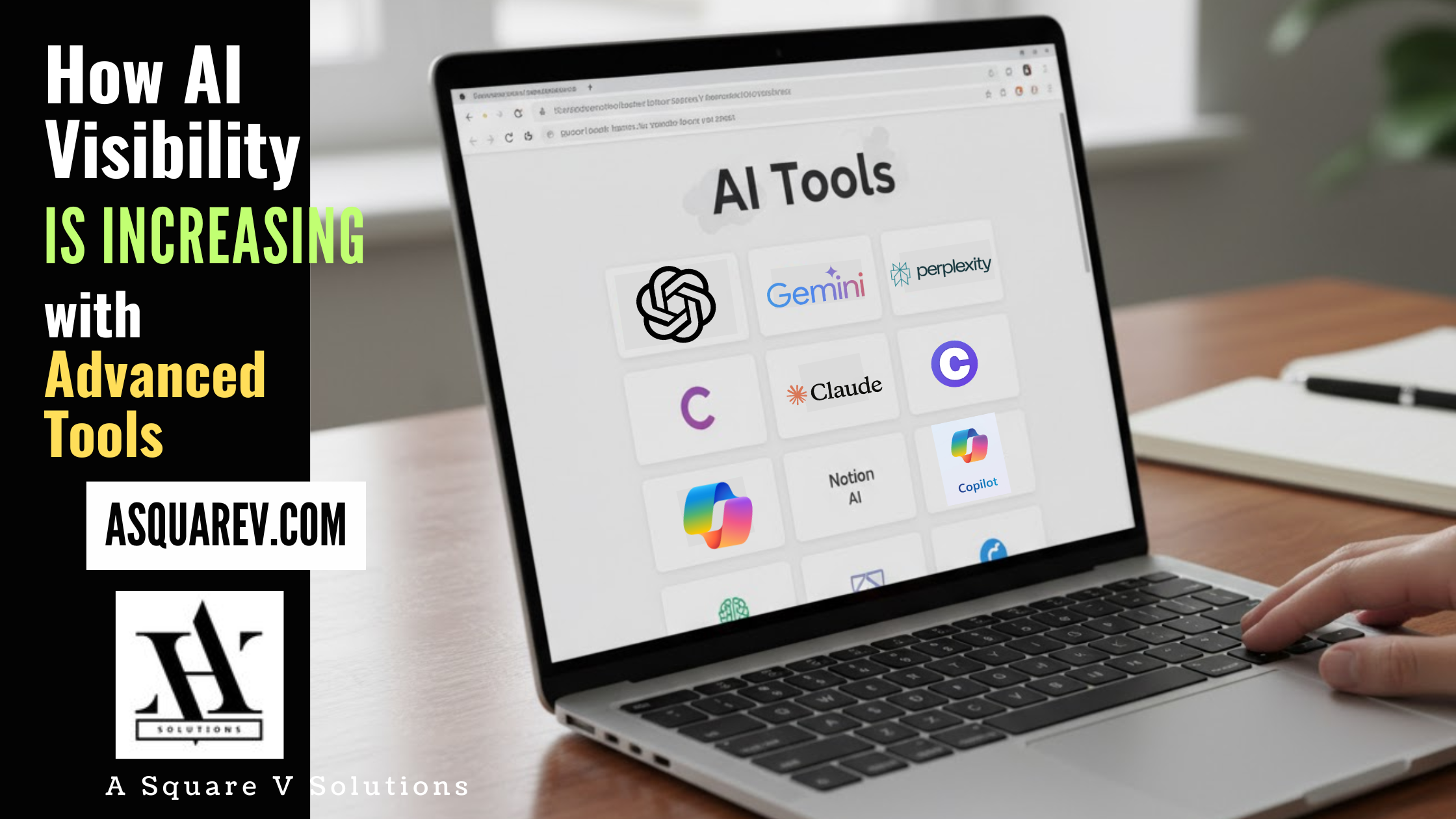
Artificial Intelligence (AI) is no longer hidden behind the scenes—it’s shaping how we work, create, and connect. Thanks to an explosion of new tools, AI has become visible, accessible, and understandable to everyone. From chatbots to creative design platforms, AI’s presence is everywhere—and growing fast.
Let’s explore how different tools are making AI more visible across industries.
AI was once confined to research labs, but now it’s in the hands of everyday users. With easy-to-use interfaces and no-code capabilities, today’s AI tools let anyone experience and experiment with intelligence systems.
Popular AI accessibility tools include:
ChatGPT (OpenAI) – natural language conversations, writing, brainstorming
Google Gemini – integrates AI into Google Workspace tools
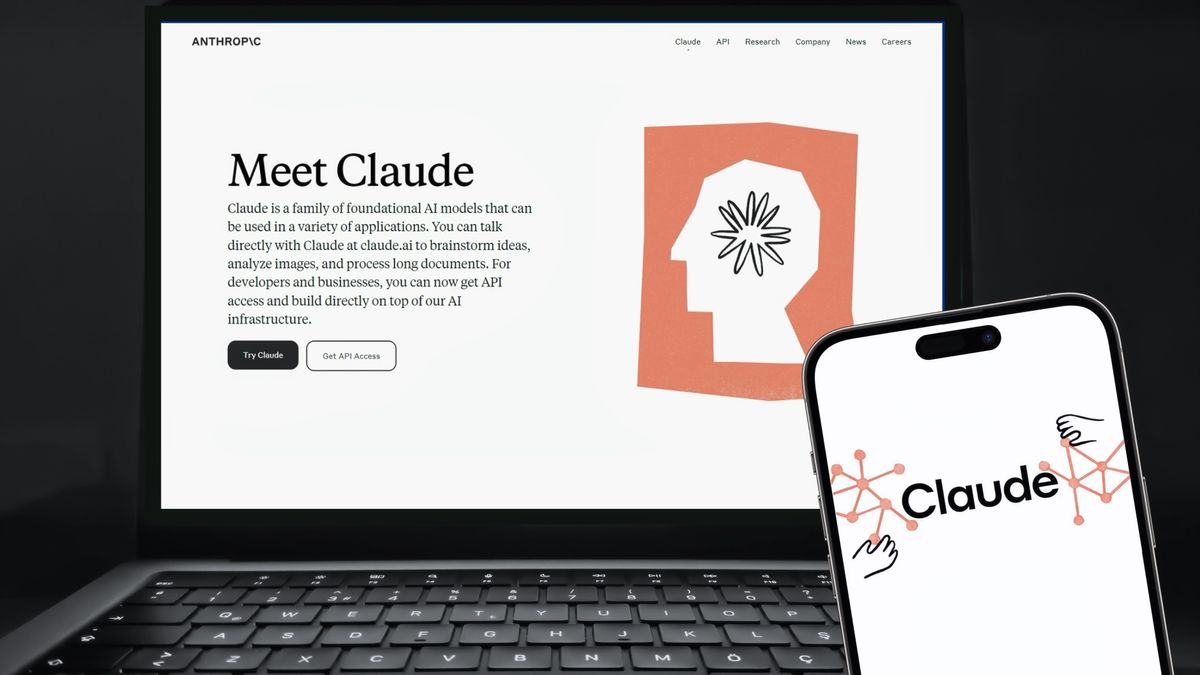
Claude (Anthropic) – context-aware writing and analysis
Perplexity AI – AI-powered search and knowledge engine
Notion AI – integrated writing and productivity assistant
Microsoft Copilot – brings AI to Word, Excel, and Teams
These tools make AI visible through intuitive interfaces and real-time responses, letting users directly interact with machine intelligence.
AI’s visibility shines brightest in the creative world. Visual tools help users see AI’s power in action—transforming words into images, videos, and art within seconds.
Leading creative AI tools include:
DALL·E 3 (OpenAI) – image generation from text prompts
Midjourney – artistic and photorealistic image creation
Leonardo AI – AI art and design platform for creators
Runway ML – video editing, motion tracking, and text-to-video tools
Pika Labs – AI-generated video and animation creation
Canva Magic Studio – AI design and presentation tools
Adobe Firefly – generative AI for Photoshop and Illustrator
These tools make AI’s creative side visible, turning abstract algorithms into tangible art, videos, and designs.
Businesses now rely on AI not just for automation but for transparent decision-making. AI visibility in analytics ensures organizations understand how insights are generated—boosting trust and adoption.
Top business and data AI tools:
Tableau GPT – natural language data visualization
Microsoft Power BI Copilot – automated analytics and AI-driven insights
Google Looker Studio – combines AI with business reporting
DataRobot – automated machine learning with explainable outputs
IBM WatsonX – enterprise AI for data transparency and trust
Explainable AI (XAI) by Google Cloud – interpretable machine learning
These tools visualize data patterns, predictions, and reasoning—making AI’s “thought process” more transparent.

AI visibility also matters to developers who want to understand, modify, and extend models. Open-source platforms now let developers see inside AI systems, promoting collaboration and transparency.
Key developer-focused AI tools:
Hugging Face – model sharing and explainable AI tools
LangChain – a framework for building AI-driven applications
LlamaIndex (GPT Index) – connecting LLMs to external data
Weights & Biases (W&B) – experiment tracking and model visualization
Gradio – builds interactive AI demos quickly
Streamlit – visualizes AI applications and dashboards
MLflow – manages the entire machine learning lifecycle
These platforms help developers and researchers visualize model performance, track training, and open up the once “black box” of AI.
AI visibility is becoming a core expectation for users, regulators, and businesses. Transparency, interpretability, and usability will define the next generation of AI tools.
Emerging tools focusing on AI transparency include:
Elicit.org – AI-powered research assistant with source traceability
Truera – model intelligence and explainability platform
Arize AI – monitors and explains machine learning behavior
Credo AI – governance and risk management for responsible AI
Fiddler AI – real-time explainability for production models
As these tools evolve, AI will no longer be an invisible engine—it will be a visible, accountable, and collaborative digital partner.
AI visibility has exploded thanks to tools that bring intelligence into our hands, eyes, and workflows. From chat interfaces to visual design platforms and transparent analytics, these innovations are democratizing AI—making it something we can see, shape, and trust.
The future of AI isn’t about machines replacing humans—it’s about humans and AI working side by side, in full view.
#ArtificialIntelligence #AITools #AIVisibility #AIDriven #AIInnovation #AIFuture #MachineLearning #AITransparency #AIAccessibility #GenerativeAI #AIinBusiness #CreativeAI #AIForEveryone #AIDevelopment #DigitalTransformation #TechTrends #AI2025 #OpenAI #Automation #DataScience